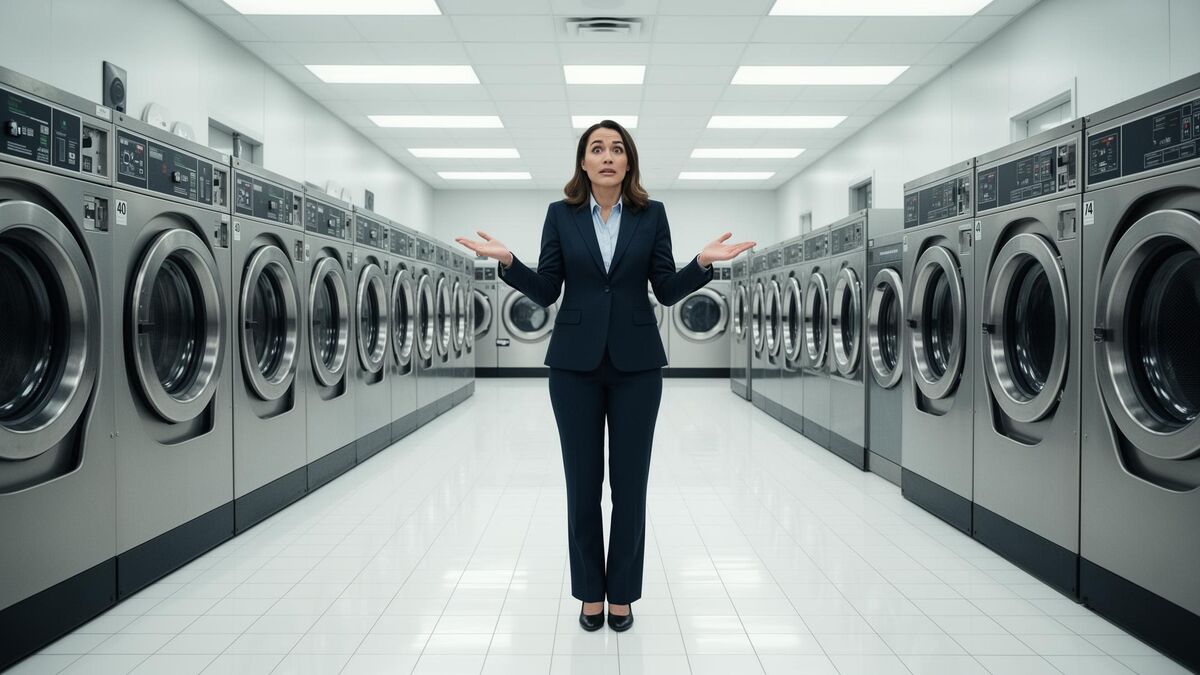
The Uncomfortable Truth About Your Business
You're a "me too" business.
Maybe you don't want to admit it. Maybe you don't realize it. But somewhere along the way, your business became indistinguishable from your competitors.
Your service is similar to theirs. Your product is similar to theirs. Your process is similar to theirs. Your customer experience is... comparable. That sameness is exactly what makes competing in an oversaturated market feel impossible — there is nothing left for a buyer to weigh except price.
And so you've done what thousands of struggling small business owners do: you've started competing on price.
You've cut your rates. You've offered discounts. You've matched competitors' quotes to win deals. And for a while, it felt like it was working. You were winning more business.
Then something shifted. You won more business, but made less money. Your margins compressed. Your profitability evaporated. And now you're trapped in a race to the bottom—chasing lower prices to compete with competitors who are also chasing lower prices, in an endless spiral toward failure.
This is commoditization. And it's costing you everything.
What Happens When You Become a Commodity
When your business becomes indistinguishable from competitors, price becomes the only variable that matters to customers. And that's when the race begins.
Here's what commoditization looks like:
Margin Compression
Your profit margins shrink. You were making 30% profit on a service. To compete, you cut your price. Now you're making 20%. To stay competitive, you cut again. Now it's 15%. Each price cut feels like a strategic move to win business. A stress test of your pricing framework reveals the true impact. It's actually a slow-motion path to bankruptcy.
Volume Trap
You tell yourself: "I'll make it up in volume." So you lower prices to win more deals. You get more business, but each deal is less profitable. You need even more volume to hit your revenue targets. You hire more staff to handle the volume, increasing your fixed costs. Now you're stuck: you need constant volume growth just to stay in place. One slow month and your margins disappear entirely.
Quality Degradation
To compete on price, you have to cut costs somewhere. You can't cut your core product—competitors will notice. So you cut subtly. You reduce service frequency. You use cheaper materials. You hire less experienced staff. You automate processes that used to be personalized. Customers notice the difference, even if they don't admit it directly. Your reputation slowly declines.
Innovation Stops
When you're fighting for every deal on price, you have no resources—financial or mental—for innovation. You're firefighting, not strategizing. You're matching competitors' moves, not creating new ones. Your business stagnates while better-differentiated competitors evolve.
Employee Turnover
When profit margins collapse, you can't invest in your team. You can't offer raises. You can't invest in training or development. You can't create career paths. Good employees leave for better opportunities. This employee retention challenge compounds the damage. You're left with whoever doesn't have other options, which further degrades quality.
Customer Disloyalty
In a commoditized market, customers have no emotional connection to your business. They'll switch to whoever is cheaper. You haven't earned their loyalty—you've just won their price comparison. The moment a cheaper competitor appears, they're gone. There's no such thing as customer lifetime value; there's only customer lifetime cost.
Business Failure
Eventually, you hit the point where your price is below your cost structure. You're losing money on every deal. You might not realize it until you're already insolvent. By then, it's too late.
This is the race to the bottom. And nobody wins it.
Why Price Competition Is A Loser's Game
Here's a fundamental economic truth: you cannot sustainably win a price war if you're a small or mid-size business.
Large corporations can compete on price because they have:
- Enormous economies of scale
- Access to cheap capital
- Diversified product lines to cross-subsidize low-margin items
- Brand loyalty that insulates them somewhat from pure price competition
You don't have these advantages. When you compete on price, you're playing a game where larger, better-capitalized competitors have inherent advantages. You're bringing a knife to a gun fight.
The only viable long-term strategy for a small business is differentiation.
The Differentiation Alternative: What Actually Works
Differentiation doesn't mean being wildly unique or revolutionary. It means being meaningfully different in ways that customers actually value.
Let's break down what differentiation actually looks like:
1. Product/Service Differentiation
You offer something competitors don't—or you offer something more effectively than they do.
Examples:
- A plumbing company that offers same-day emergency service (when competitors typically need 24 hours)
- A consulting firm that specializes in a specific niche (instead of being a generalist)
- A manufacturer that offers customization options competitors don't
- A service business that offers a service guarantee competitors don't have
The key: The differentiation must be something customers actually care about and are willing to pay more for.
2. Process Differentiation
You deliver the same core product/service more efficiently or with better experience.
Examples:
- A faster implementation process that gets customers value sooner
- A personalized onboarding that makes the customer feel valued
- A proactive support model that fixes problems before customers report them
- A streamlined ordering and delivery process that removes friction
3. Brand/Experience Differentiation
You create an emotional connection or brand experience that competitors don't.
- A boutique fitness studio with a community (not just a workout)
- A local business that emphasizes neighborhood roots and local sourcing
- A company that's known for exceptional customer service
- A brand that stands for specific values (sustainability, craftsmanship, etc.)
4. Niche Differentiation
You serve a specific customer segment better than generalists do.
- A marketing agency that specializes in B2B SaaS (not general marketing)
- A cleaning service that specializes in medical offices (not residential homes)
- An accounting firm that serves construction contractors (not all small businesses)
- A training company that focuses on remote teams (not all teams)
In a niche, you can charge premium prices because you understand the specific needs, pain points, and regulatory environment better than generalists. You're not competing on price; you're competing on expertise.
5. Value-Added Services Differentiation
You bundle your core offering with additional services competitors don't offer.
- A software vendor that includes comprehensive training and support (not just the software)
- A contractor that includes a warranty and follow-up inspections
- A consultant that includes implementation support and ongoing optimization
- A product company that offers flexible financing options
Differentiation Check
Are you competing on price because you don't know your real value?
Businesses stuck in the commodity trap often have hidden strengths they're not leveraging. A structured assessment reveals your true competitive advantages—so you can stop racing to the bottom.
No consultants. No ongoing fees. Just clarity.
The Critical Question: What Actually Makes Your Business Different?
Before you can differentiate, you have to know what makes you different. And most business owners can't answer this question honestly.
Ask yourself:
1. Why should a customer choose my business instead of my competitor?
If your honest answer is "because we're cheaper," you're a commodity. If it's "because we're the only one available," that's temporary and not defensible. If it's something about your unique offering, process, expertise, or experience—that's a differentiator.
2. What can I do that competitors struggle to do?
Maybe you have deep expertise in a niche. Maybe you have relationships competitors don't have. Maybe you have a process that's more efficient. Maybe your team has skills competitors don't. Those are differentiators.
3. What do my best customers value most about working with me?
Not price. What else? Reliability? Innovation? Personalization? Speed? Quality? Expertise? Whatever your best customers value is likely where your differentiation lies.
4. What would happen if I raised my prices 10%?
Would you lose all your customers? Or would most stay because they value what you offer? If they'd mostly stay, you have differentiation. If you'd lose them all, you're a commodity.
5. Can a competitor easily copy what I do?
If yes, that's not a sustainable differentiator. If no—if there's something proprietary, expertise-based, or relationship-based that's hard to copy—that's defensible differentiation.
If you can't answer these questions with clarity, it's time to have an honest conversation with yourself: Are you a commodity? And if so, are you ready to change?
The Cost of Waiting
Here's the uncomfortable part: the longer you wait to differentiate, the harder it becomes.
Once your market perceives you as a commodity, changing that perception is extremely difficult. Customers have already decided you're interchangeable with competitors. Raising your price signals you're trying to take advantage of them. Claiming new differentiation feels like marketing hype.
The time to differentiate is now. Not when business is slow. Not when you "have time to think about it." Not when you've already lost half your profit margin. Now.
The Pricing Shift That Comes With Differentiation
Here's the magic that happens when you have real differentiation: you can raise your prices.
Not aggressively. Not arbitrarily. But meaningfully.
When customers perceive genuine value in what you offer that competitors don't, they're willing to pay for it.
- A plumbing company that guarantees same-day emergency service can charge 20-30% more than competitors who don't offer it.
- A consulting firm that specializes in a specific niche can charge 30-50% more than generalists, because the niche expertise is worth more to that specific customer.
- A software company that includes comprehensive training and support can charge more than competitors selling bare-bones software.
This is the inverse of the commodity trap. Instead of racing to the bottom, you're building a platform to raise your prices and improve your margins.
The Business Owner's Choice
You have a choice. Every business owner does.
Choice 1: Compete on Price
This path leads to:
- Compressed margins
- Constant stress
- Employee turnover
- Quality degradation
- Customers who aren't loyal to you
- Eventually, business failure
Choice 2: Differentiate and Build Real Value
This path leads to:
- Healthy profit margins
- Premium pricing power
- Customers who choose you for reasons beyond price
- Ability to invest in your team and your business
- Sustainable growth
- Long-term business health
The choice is yours. But the consequences are real.
The Honest Assessment: Is Your Business a Commodity?
Before you move forward, you need honesty.
Signs your business is a commodity:
- You're regularly matching competitor pricing
- Customers often say: "You're the same as everyone else; why should I use you?"
- You compete for deals based on price comparisons
- Your customers switch to competitors easily when price changes
- You can't articulate what makes you different
- Your marketing talks about "high quality" and "competitive prices" (generic language)
- You regularly discount to win deals
- Your profit margins are getting thinner every year
- You're adding features/services just to stay competitive
If three or more of these resonate, you're at risk of commoditization. If more than five, you're already a commodity.
And here's the critical truth: The longer you wait, the harder this is to fix.
If discounting has become your default sales response, this companion article addresses the specific pricing discipline strategies that break the pattern: Stop Discounting: How Price Cuts Erode Value and Turn Your Business Into a Commodity.
Your Next Step
Stop competing on price. Start building differentiation.
This doesn't require:
- A complete business overhaul
- Expensive consultants
- Years of strategic planning
- Major capital investment
It requires:
- Honest self-assessment about what actually makes you different
- Understanding what customers genuinely value
- Identifying where you can be meaningfully better than competitors
- Building your business around that differentiation
- Having the courage to raise your prices
The businesses that thrive aren't the cheapest. They're the ones that are meaningfully different in ways customers value.
The question is: Are you ready to stop being a "me too" business?
Key Takeaways
Commoditization is the slow death of business profitability. When you become indistinguishable from competitors, price becomes the only variable that matters, and you're trapped in a race to the bottom where nobody wins. The solution is differentiation: finding and amplifying what makes your business meaningfully different in ways your customers value. This could be your service, your process, your niche expertise, your customer experience, or your values—but it must be something real, defensible, and worth paying more for. Businesses that successfully differentiate enjoy healthy margins, loyal customers, pricing power, and sustainable growth. Those that don't will eventually fail.
Identify Your Competitive Advantages
Comprehensive business health assessments can help you identify exactly where your competitive advantages lie, whether you're drifting toward commoditization, and which specific differentiators would have the highest impact on your profitability and market positioning.
Get Your Business Health Assessment