You have seen it happen — or you have lived it.
A Tuesday afternoon that had no business being busy. A Saturday morning that started normal and became something else entirely within twenty minutes. A group of forty who called ahead but did not mention the forty more who were following right behind them. Or simply that inexplicable alignment of the universe where every customer you have apparently decided, independently and simultaneously, that right now is the perfect moment to walk through your door.
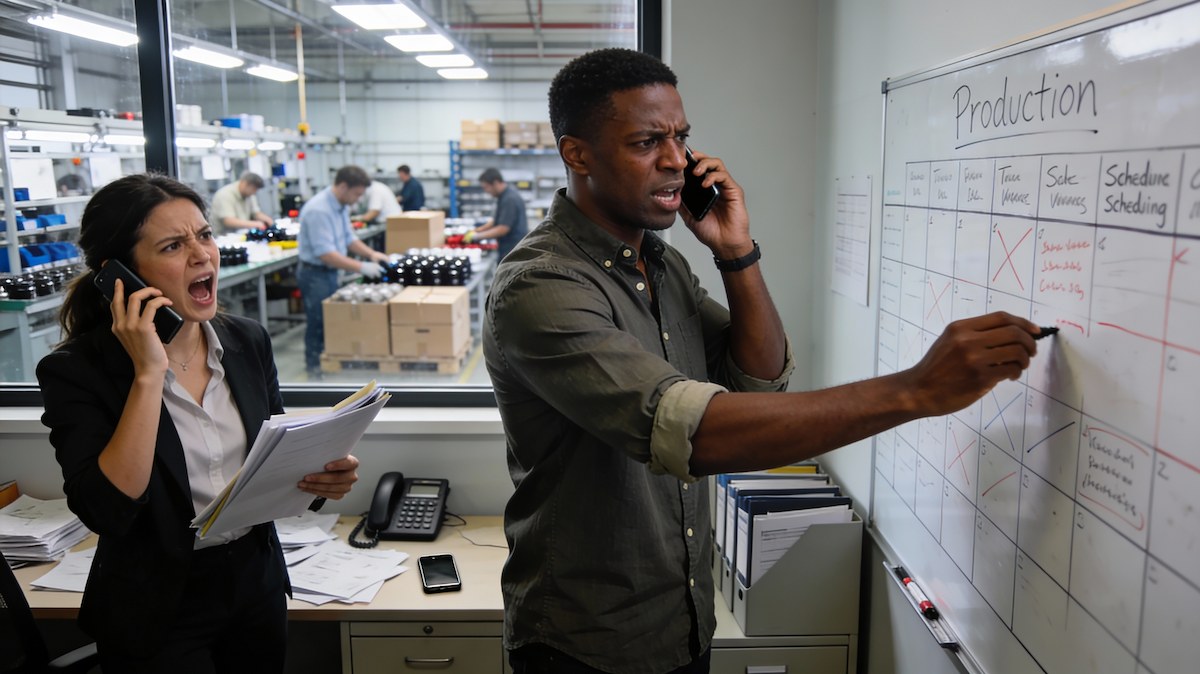
The line is out the entrance. The kitchen is buried. Your best barista is making the face you have learned to read as "I am three orders from losing it." Every customer who has been waiting longer than they expected is looking at you with the particular expression that sits somewhere between patience and a one-star review. And there is no cavalry coming. It is you, the team you have, the guests in front of you, and the next fifteen minutes that will determine whether this surge becomes a story you tell or a reputation event you spend months recovering from.
The instinct most leaders default to is the one that feels most productive: move faster. Work harder. Speed everything up. But speed without structure in a food service surge does not resolve the backlog. It compounds it.
What resolves a surge is not speed. It is leadership that creates structure inside the chaos — decisions made in the first sixty seconds that calm the visible environment, organize the invisible one, and give the team a system to work through the backlog rather than a directive to work faster inside it.
This is the discipline of effective food service customer surge management — and it shares operational DNA with broader restaurant staffing strategy and scheduling design. In visitor-heavy markets the surges are calendar-driven — the top industries for small business in Central Florida show how tourism volume sets the staffing pattern for an entire region. Below are the six insights that separate operators who come out of those moments stronger from the ones who just survive them.
Why Surge Management Is a Leadership Discipline
Each principle below is brief by design — expand any item for the operational context behind it.
The Six Insights That Define Effective Surge Management
Each of the six insights below is independently useful. Together, they form the operating framework that the best food service business leaders use when the volume exceeds the design.
The First 60 Seconds Belong to You, Not the Backlog
Stop, assess, and take command of the visible environment before producing anything.
Read the full scope of the surge — not just the queue you can see. Identify the specific constraint that is breaking the system. Communicate visibly that you are in command. The leader who jumps directly into production becomes another line position — and a line position does not resolve a surge. Leadership resolves a surge.
Slow Down to Speed Up — The Counterintuitive Physics
A team working at a slightly more deliberate pace clears the backlog faster than a team at maximum speed.
Maximum speed creates mistakes. Mistakes create reworks. Each rework consumes time already committed to orders waiting behind it. Coach in the moment with the word "steady," not "faster" — because steady is the instruction that produces the outcome you actually need.
Triage the Queue, Sequence the Kitchen
Front-of-house and back-of-house are two different problems requiring two different solutions.
The front-of-house queue is a perception problem — solved with acknowledgment, expectation-setting, and visible management. The back-of-house production is a sequencing problem — solved by actively organizing the queue: batch what can be batched, prioritize what has waited longest, communicate the logic so the team is not guessing.
Simplify the Menu — The Decision Available Right Now
A surgical, temporary menu limit reduces production complexity without reducing revenue volume.
Identify the two or three items contributing disproportionately to station time or ingredient complexity. Communicate a 30–45 minute modified availability as a confident information point — not an apology. Guests accept limitations far more readily than they accept visible disorder.
Redeploy, Do Not Multitask
Identify the gap position. Deploy fully. Stay until the bottleneck clears.
Multitasking feels like maximum contribution but produces the leadership equivalent of a thinly spread resource. The highest-value position is usually the gap — the function most critical to throughput and least covered by the existing configuration. Once you deploy there, do not let yourself get pulled away.
Debrief the Surge — Turn Today's Crisis Into Tomorrow's Readiness
Within 24 hours, a 30-minute debrief converts a chaotic event into specific, implementable readiness.
Three questions: What broke down first? What worked? What is the one specific change that would most improve performance in the next surge? One change implemented and practiced is more valuable than a comprehensive plan that lives in a notebook.
Quick Health Check
Not sure where your business stands right now?
Most business owners we talk to can point to what's going well—but struggle to identify what's quietly holding them back. BizHealth.ai finds those hidden gaps in 30–40 minutes.
No consultants. No ongoing fees. Just clarity.
Two Problems, Two Playbooks
One of the most common surge management mistakes is treating the front-of-house queue and the back-of-house production backlog as the same problem. They are not. They require different thinking, different actions, and different communication.
Front-of-House: A Perception Problem
Guests are not suffering because they cannot have their order in 30 seconds. They are suffering because they do not know how long they will be waiting or whether anyone is managing the situation. Walk the line. Acknowledge guests. Give a realistic wait estimate. Thank them once — not repeatedly, which signals anxiety.
Back-of-House: A Sequencing Problem
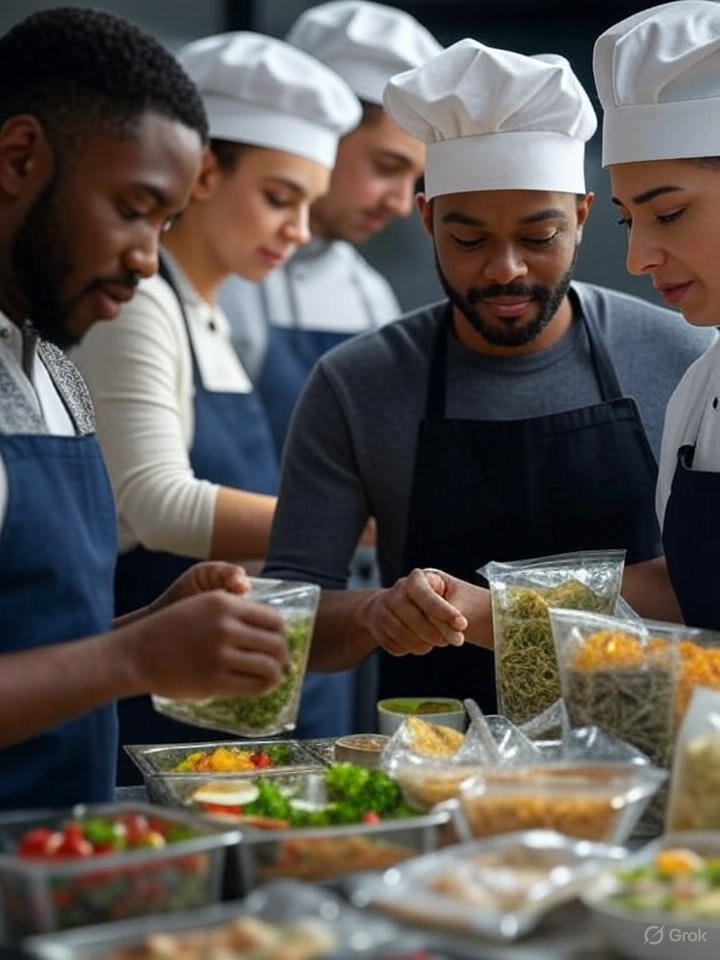
When a kitchen is overwhelmed, production becomes reactive — made in the order items are called out, not in the order that produces the most efficient throughput. Effective sequencing means batching what can be batched, prioritizing what has waited longest, and communicating the logic so the team is not guessing independently.
"The leader who is not on a production station has a unique asset: the ability to see the full picture. Using that visibility to actively sequence production rather than simply observe it is where the most experienced food service operators earn their authority."
The Leadership Reality Beneath All Six Insights: Composure in Command
Every insight above rests on the same foundational discipline — the one that is hardest to maintain when the pressure is highest and the stakes are most visible.
The food service leader who loses composure in a surge — who communicates urgency that becomes anxiety, who races in a way that signals fear rather than capability — has removed the one variable the team most needs to be able to rely on. The guests can feel the urgency. The kitchen can feel the pressure. The team knows how difficult this moment is without the leader's emotional state confirming it.
Composure is not a personality trait. It is a practiced, developed discipline — one that comes from having thought through surge scenarios before they happen, from having a framework for the first sixty seconds, and from knowing specifically where your presence creates the most value. Leaders who have done that preparation do not need to suppress panic in a surge. They have replaced the conditions for panic with a structure for response. That structure is what composure looks like in practice.
The line will go out the door again. It probably already has a date on the calendar that you do not know about yet. The question is not whether the surge is coming. It is whether you will be the kind of leader who has a structure ready for it — or the kind who finds out what their structure looks like while everyone is watching.
The operational gaps that make surges more damaging than they need to be — the absence of surge protocols, the over-reliance on speed over sequence, the missing menu simplification decision, the skipped debrief — are all identifiable before the next surge arrives. Tools like a comprehensive business health assessment help operators surface exactly these kinds of operational readiness gaps. The leaders who know their gaps before the surge use that knowledge to build the readiness that makes the surge manageable. The ones who discover their gaps during the surge pay a higher price for the education.
For broader operational guidance, the U.S. Small Business Administration offers resources on managing small business operations and finances. Owner-operators may also benefit from our companion piece on daily grind fixes for early-stage food operations and our deep dive into the disciplines of building a high-performing team.
Frequently Asked Questions
What is the most important thing to do when a customer surge hits?
Spend the first 60 seconds assessing — not producing. Read the true scope of the backlog, identify the specific constraint that is breaking the system, and visibly take command of the room. The leader who jumps directly onto a station has become another line position, which does not resolve a surge.
Why does working faster make a food service surge worse?
Maximum speed produces mistakes, and mistakes produce reworks. Every rework consumes time that was already committed to the orders still building behind it. A sustainable, deliberate pace that produces zero reworks moves through a backlog faster than maximum speed that produces even a small number of them.
Should I limit the menu during a surge?
Yes — a temporary, surgical menu simplification is one of the most underused tools in surge management. Identify the two or three items disproportionately driving station time or ingredient complexity, and modify their availability for 30–45 minutes. Communicate it as a confident information point, not an apology.
Where should the leader physically be during a surge?
In the gap position — the function most critical to throughput and least covered by the existing team configuration. That might be the front-of-house/kitchen handoff, the expediting position, or the runner. Deploy with full attention and stay there until the bottleneck clears.
What should a post-surge debrief cover?
Three questions answered within 24 hours: What broke down first? What worked? What is the one specific change that would most improve performance in the next surge? One implemented change is worth more than a comprehensive improvement plan that never changes daily behavior.
Is Your Operation Ready for the Next Surge?
Surge readiness is one of the operational dimensions BizHealth.ai evaluates. Discover whether your team, sequencing, and protocols are built for the volume your business actually needs to handle — before the next line goes out the door.